
Mythematics - 1
Some things don’t add up

Let me start by wishing all of my followers a happy and healthy 2026. After the last year I think we all deserve it.
The start of a New Year is traditionally a time for taking stock, assessing progress, and perhaps making resolutions about how we will behave in future. I have been assessing progress for a good many years now, but recently I have wondered whether we make any at all. Indeed, given the extraordinary prevalence of conspiracy theories and peculiar evidence-free views that are now widespread, I worry that we may even be going backwards. As a psychologist, I understand that people are not rational, and do not make decisions based on evidence. I also understand a good many of the causes of this. However, this is no reason to give up hope, and to stop getting messages out there in favour of evidence-based decisions. I’d like to start 2026 by examining some mathematical myths put about by economists.
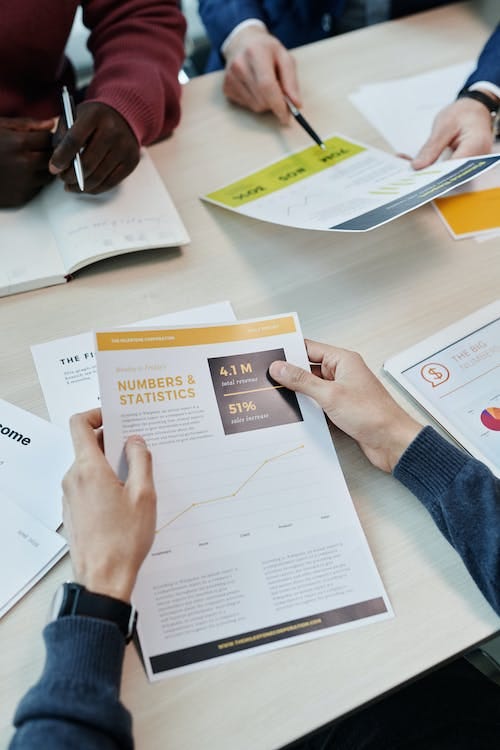
In the last few years it has become extremely obvious that many people do not feel the political system is doing much for them, that the economic system has left them behind. For some, this is an indictment of the capitalist system, and the only solution is to overthrow it and replace it with an alternative. For others, the solution appears (bizarrely) to be even more of the same punishment, and this is exactly what right-wing parties in Europe are offering. Deliberately or not, they accompany this with an agenda of blame: in particular, they blame immigrants and people receiving benefits from publicly funded welfare programmes — standard right-wing scapegoats.
It’s worth starting by looking at the nature of the capitalist economic system. For many, it is synonymous with free markets. This goes back to the days of Margaret Thatcher and Ronald Reagan, both of whom were free-market advocates. The views adopted by Thatcher and Reagan were simplistic and their grasp of certain issues surprisingly weak, given their obvious intelligence. I was not surprised when both were later diagnosed with Alzheimer’s. Both were heavily influenced by economic theorists such as Milton and Rose Friedman, whose popular 1980 book “Free to Choose” emphasised the power of the market, which they believed was good for everyone. I read it at the time, and had my doubts. Forty-five years later those doubts have become certainties.
I believe that they misunderstood the nature of capitalism. They accepted the widely held view of the time, that economic decisions were essentially rational. This view had been propounded by the 18th century mathematician and economic thinker Bernoulli (1700-1782), who had presented equations describing financial decisions as the outcome of a rational, almost mathematical, process. To me this is a myth. I define capitalism as gambling. I know that some people in international finance throw their hands up in horror at such a definition (I won’t go into detail about how I know such people, but you can’t choose your relatives). Any investment decision is a bet: we are predicting that a venture will succeed rather than fail, and putting our money where our mouth is. In other words, we are betting money on an outcome which is not certain. This is the very definition of gambling. It is not, of course, totally random gambling, like betting on a roulette wheel or tossing a coin, but much gambling is not random. Take horse racing; devotees to this pastime will try to take into account a range of factors, such as the horse’s previous performances, and the state of the racecourse. Gamblers can be wrong about all of these things; the process is not random, but it is still gambling.
In effect, financial decisions are made in the same way. Potential investors may take into account a firm’s past performance. They may also consider changes in management: that new managing director has had a great record with his previous company, or this new agreement with the unions makes strikes unlikely. They may try to take political considerations into account, according to whether they think these are favourable or unfavourable to the company concerned. But they can be wrong. What’s more, circumstances can change dramatically. An unexpected war can affect things dramatically, such as Russia’s invasion of Ukraine, which impacted oil prices. An earthquake or a hurricane can also impact a business severely. And what if that agreement with the unions breaks down? What if the government’s new tax makes it more difficult to recruit staff? This inherent unpredictability led to the old joke that economic forecasting was devised in order to make astrology look respectable. Instead of looking for rationality in economics, and devising mathematical notions that don’t seem to apply in real life, what about applying the mathematics of gambling?
One of the things we know about gambling is that ultimately winnings tend to accrue to the gambler who has the most money to begin with. Casinos are well aware of this, which is why they have limits on how much a gambler can wager. They need to make sure that they are the participants who have the most money, otherwise one big win could clear them out. Even some random games, such as roulette, can be beaten. To win at roulette, what one does is to double one’s stake after every loss. There may be many losses, but eventually this strategy will result in a very big win, and wipe them out. There are two reasons why this is difficult. The first is the aforementioned limit on the size of bets (and this is one of the reasons for it). The second is that doubling your stake after every loss will soon result in the necessity for an extraordinarily large stake, and most people will simply not have enough money.
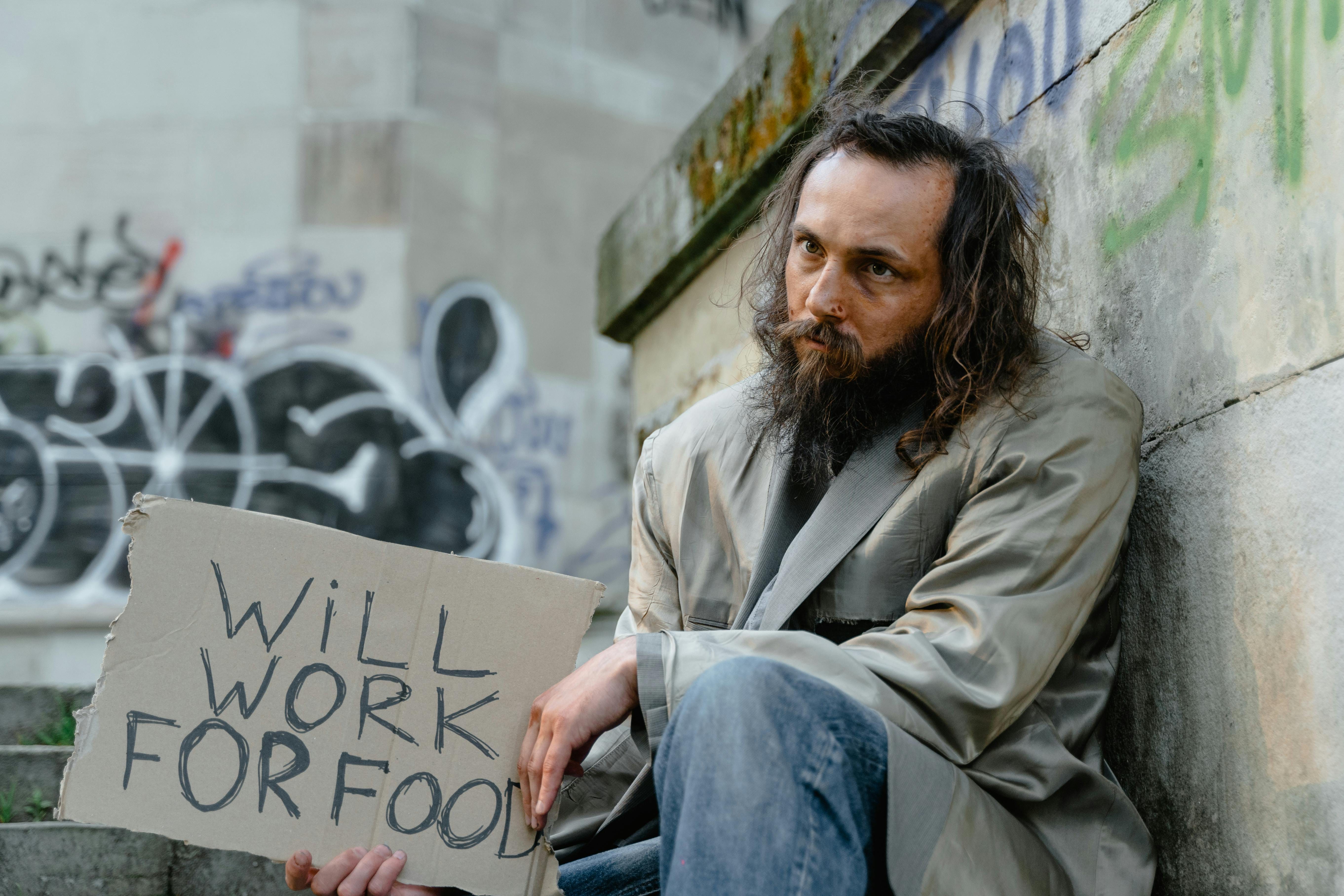
What is the relevance of this to capitalism? Simply this: if capitalism is a rational process, then anyone of basic intelligence can take part, and gradually all should be able to make money, given rational investment and a reasonable amount of work. Being poor is then viewed as a choice, a feckless lifestyle, and undeserving of help from the state. Viewing capitalism as gambling means emphasising the chance nature of much economic success, outside the individual’s control. If capitalism is gambling, we would expect that over many years wealth would accrue to a few individuals who have placed successful bets, and/or had more money to start with (perhaps inherited). As their wealth increased, we would expect that they would win more and more. The richer they became, the richer they could become. Ultimately, we would expect that most of the wealth in the world would be scooped up by a very few people. In effect, we would expect what we actually see in the world today. There are very few billionaires, a number of multimillionaires, and most people’s wealth has not increased much in years, if at all. Currently, billionaires are being watched to see which one will become the world’s first trillionaire, a competition now being waged between a handful of people, and whose outcome is a matter of indifference to almost everyone in the world. None of these men – and they are all men – need the money. They buy houses, islands, private planes and yachts, and even treat space travel as a personal hobby. These people could lose almost all of their wealth, and still be rich. Their wealth also buys them political power, whether through plain bribery or more subtle influences on policy, which mysteriously seems to veer in their direction when they make large donations to political parties. But the other participants in the game are not winning anything, and nor do they have much power. This outcome fosters cynicism about the political system in general, and the attitude often expressed today that people might as well vote for an extreme party, because everyone else has had a turn and done badly. This is clearly not what the architects of the modern version of capitalism expected. The outcome was supposed to be that everyone would be better off, but this was based on the idea that economic behaviour was rational, and capitalism was definitely not gambling.
The proof of the Christmas pudding, I suggest, is in the eating…
For further evidence — actual scientific evidence — on the topic of irrationality and economic behaviour, I heartily recommend “Thinking, fast and slow” by the psychologist Daniel Kahneman, whose work won him the Nobel Prize; not for psychology (there isn’t one), but for economics.
On the subject of unregulated capitalism, I recommend “23 things they don’t tell you about capitalism”, by Ha-Joon Chang, who is a great enthusiast for capitalism, provided it is properly regulated.
Both of these books are available from Penguin, and both are very readable.
Next time: Mythematics - 2: who is to blame?